
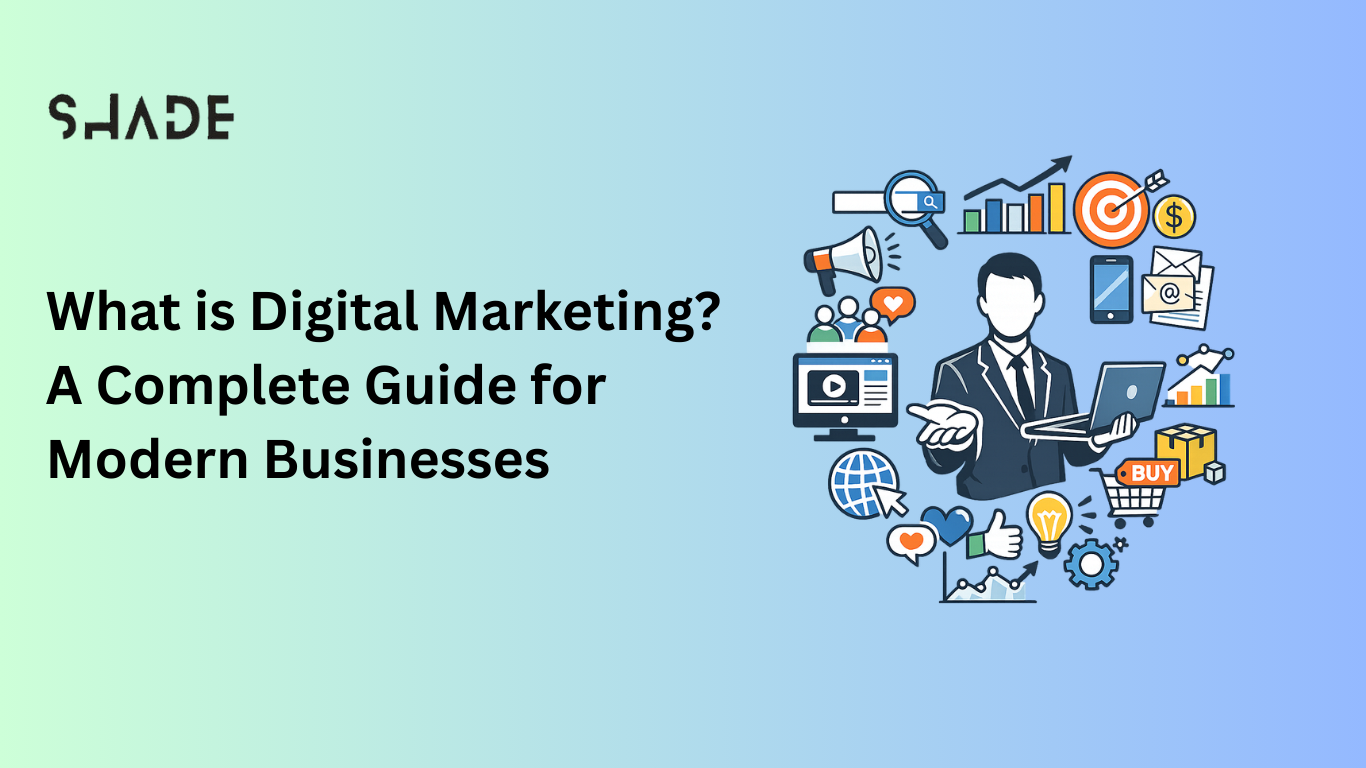
A Complete Guide for Modern Businesses
In today’s fast-paced, technology-driven world, businesses no longer rely only on traditional marketing methods like newspapers, hoardings, and TV ads to reach their audience. What is Digital Marketing? .The internet has completely changed how brands communicate, sell, and build relationships with customers. This transformation has given rise to a powerful concept known as digital marketing. For brands that want to grow, compete, and stay relevant, understanding digital marketing is no longer optional—it is essential. At Shade Marketing and PR Agency, we believe digital marketing is not just about promotion, but about building trust, visibility, and long-term brand value in the digital space.
What is Digital Marketing?
Digital marketing refers to all marketing efforts that use digital platforms, technologies, and online channels to promote products, services, or brands. It includes everything from websites and search engines to social media platforms, email campaigns, mobile apps, and online advertisements. Unlike traditional marketing, digital marketing allows businesses to reach their audience in real time, measure results accurately, and personalize communication based on user behavior and interests.
At its core, digital marketing is about connecting the right brand with the right audience at the right time through the right platform. It focuses on building meaningful interactions rather than just broadcasting messages. This is what makes digital marketing powerful—it creates two-way communication between businesses and consumers, making engagement more authentic and impactful.
Why Digital Marketing is Important for Businesses
The modern customer spends a significant amount of time online—searching for information, comparing products, reading reviews, and interacting on social media. This shift in consumer behavior has made digital marketing the backbone of business growth. If a brand is not visible online, it almost feels invisible in the market.
Digital marketing helps businesses increase brand awareness, generate quality leads, improve customer engagement, and boost sales. It allows even small businesses to compete with larger brands by using smart strategies instead of big budgets. Most importantly, digital marketing offers measurable results, enabling brands to track performance, optimize campaigns, and improve ROI continuously.
Core Components of Digital Marketing
Search Engine Optimization (SEO)
SEO is the process of optimizing a website to rank higher on search engines. When users search for products or services online, they usually click on the top results. SEO helps businesses appear in those top positions organically. It includes keyword optimization, content creation, technical improvements, and building website authority. A strong SEO strategy ensures long-term visibility and consistent traffic.
Content Marketing
Content marketing focuses on creating valuable, informative, and engaging content to attract and retain customers. This includes blogs, articles, videos, infographics, podcasts, and guides. Good content builds trust, positions a brand as an authority, and nurtures customer relationships. Instead of selling directly, content marketing educates the audience and influences their buying decisions naturally.
Social Media Marketing
Social media marketing uses platforms like social networks to promote brands, engage users, and build communities. It allows businesses to interact directly with customers, respond to queries, share updates, and create brand loyalty. Social media is not just about posting content—it’s about storytelling, relationship building, and emotional connection with the audience.
Search Engine Marketing (SEM) and Paid Advertising
SEM involves paid advertising on search engines and other platforms. These ads help brands appear instantly in front of potential customers. Paid campaigns are highly targeted, allowing businesses to reach specific audiences based on location, interests, behavior, and demographics. When used strategically, paid advertising can generate quick leads and conversions.
Email Marketing
Email marketing remains one of the most effective digital marketing tools. It helps businesses stay connected with their audience through personalized messages, updates, offers, and newsletters. Email marketing builds long-term relationships, improves customer retention, and drives repeat business when done ethically and creatively.
Influencer and Affiliate Marketing
Influencer marketing uses trusted individuals to promote products and services. These influencers already have loyal audiences, making brand recommendations more credible and impactful. Affiliate marketing works on a commission-based model where partners promote a brand and earn for every successful conversion. Both methods help expand brand reach and credibility.
How Digital Marketing Works
Digital marketing works through a combination of strategy, creativity, data, and technology. It starts with understanding the target audience—who they are, what they need, and where they spend their time online. Based on this understanding, businesses create digital strategies that include the right platforms, content, and communication methods.
The next step is execution—launching campaigns, publishing content, running ads, and engaging with users. Then comes performance tracking, where data is analyzed to understand what’s working and what’s not. This data-driven approach allows continuous improvement, making digital marketing more efficient over time.
Benefits of Digital Marketing
Global Reach
Digital marketing allows businesses to reach customers beyond geographical boundaries. A local brand can attract international customers with the right online strategy.
Cost-Effective Marketing
Compared to traditional marketing, digital marketing is more affordable and offers better returns. Even small budgets can deliver significant results with smart planning.
Measurable Results
One of the biggest advantages of digital marketing is analytics. Brands can track impressions, clicks, conversions, engagement, and ROI, making decision-making data-driven.
Personalized Communication
Digital platforms allow personalized messaging based on user preferences and behavior. This improves customer experience and conversion rates.
Brand Trust and Credibility
Consistent online presence, quality content, and transparent communication help build brand trust and long-term credibility.
Digital Marketing vs Traditional Marketing
Traditional marketing focuses on one-way communication, while digital marketing encourages interaction. Traditional methods are harder to measure, whereas digital marketing provides detailed performance insights. Digital marketing is flexible, scalable, and adaptive, while traditional marketing is more rigid and expensive. In today’s business environment, digital marketing doesn’t replace traditional marketing completely—it complements it, creating a powerful integrated strategy.
The Role of Digital Marketing in Brand Building
Digital marketing is not just about selling products—it’s about building brands. A strong digital presence creates brand identity, voice, and personality. Through consistent messaging, visuals, and engagement, brands build emotional connections with customers. Over time, this transforms customers into loyal supporters and brand advocates.
Future of Digital Marketing
The future of digital marketing is driven by technology, automation, artificial intelligence, and data personalization. Consumer expectations are evolving, and brands must focus more on customer experience, authenticity, and value-driven communication. The brands that adapt to change, innovate continuously, and focus on meaningful engagement will dominate the digital landscape.
Conclusion
Digital marketing is the foundation of modern business growth. It connects brands with audiences, builds trust, drives engagement, and creates sustainable success. It is not just a marketing tool—it is a business strategy that shapes brand identity, customer relationships, and market positioning. For businesses looking to grow in today’s competitive environment, digital marketing is not a choice—it is a necessity.
At Shade Marketing and PR Agency, we see digital marketing as a long-term investment, not a short-term tactic. It is about building digital authority, creating brand stories, and driving real business impact. In a world where everything is going digital, the brands that master digital marketing will lead the future.