
In 2026, a website is no longer just a digital visiting card for a brand—it is the most powerful sales machine, trust builder, and brand ambassador rolled into one. For businesses working with a modern agency like Shade Marketing and PR Agency, a high-converting website is not about flashy visuals or heavy animations alone; it’s about strategy, psychology, performance, and user experience working together in perfect balance. Today’s users are smarter, more impatient, and more informed than ever before. They don’t browse websites—they scan, judge, and decide within seconds. That means your website must communicate value instantly, guide users naturally, and convert them without friction.
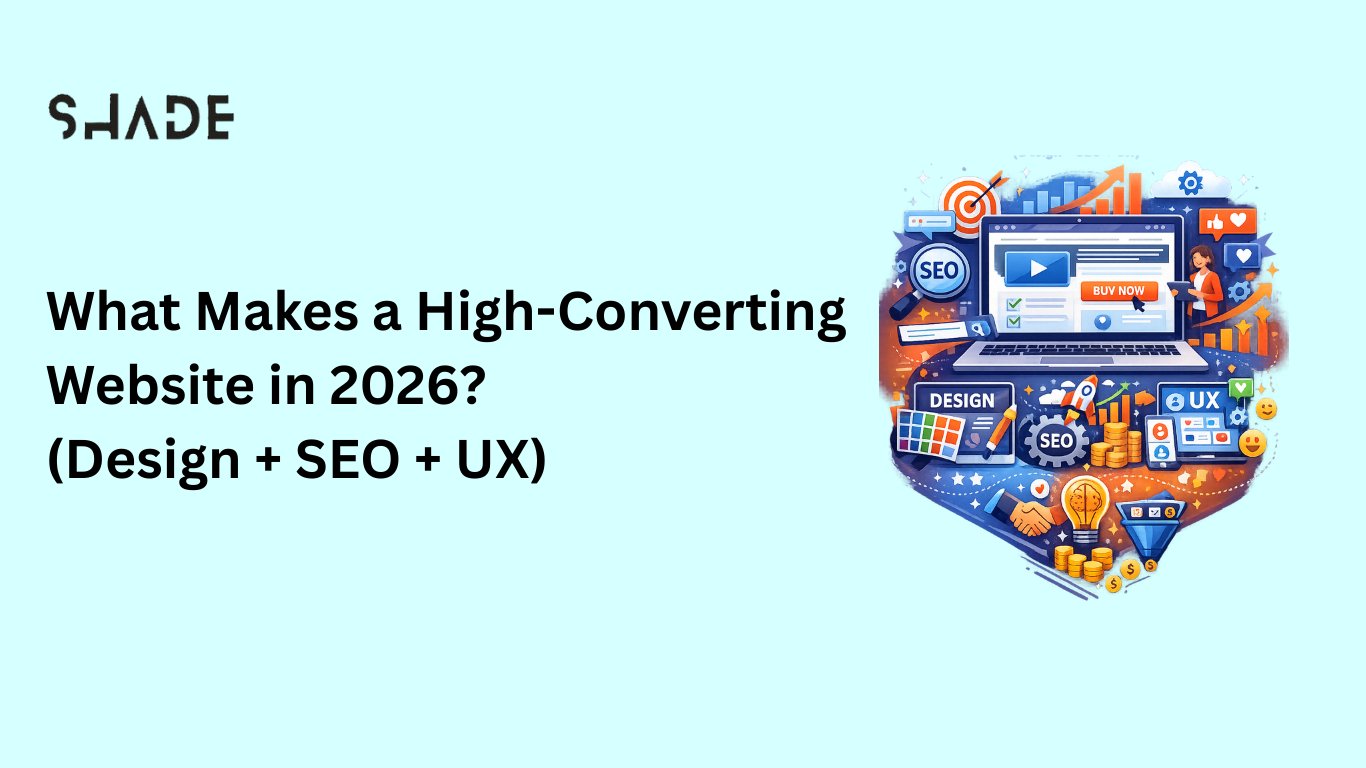
A high-converting website in 2026 is built on three powerful pillars: Design, SEO, and UX (User Experience). These are not separate elements anymore—they are deeply interconnected. Great design improves UX, UX improves engagement, engagement boosts SEO, and SEO brings the right traffic that is more likely to convert. When these three systems work together, a website stops being a brochure and starts becoming a conversion engine.
Design: More Than Looks, It’s Visual Psychology
Clean, Purpose-Driven Layouts
In 2026, minimalism isn’t just a trend—it’s a necessity. High-converting websites use clean layouts with clear visual hierarchy. White space is no longer “empty space”; it’s a tool that directs attention. Headlines, call-to-action buttons, forms, and important content are positioned strategically so the user’s eyes naturally flow through the page. Instead of overwhelming users with too many elements, modern design focuses on clarity, structure, and breathing space.
A conversion-focused layout makes the user feel comfortable, not confused. When visitors land on a page, they should immediately understand what the brand offers, who it’s for, and what action they should take next—without thinking too hard.
Brand Identity That Builds Trust
Trust is the real currency of conversions in 2026. Colors, fonts, images, and micro-visuals are not chosen randomly—they reflect brand personality and emotional positioning. A high-converting website visually communicates credibility, professionalism, and reliability. From consistent color palettes to typography choices, everything contributes to subconscious trust-building.
For agencies like Shade Marketing and PR Agency, this means designing websites that don’t just look good, but feel authentic and aligned with the brand voice. When users trust the brand, they convert faster and stay longer.
Mobile-First Visual Experience
With mobile traffic dominating, design in 2026 starts with mobile—not desktop. High-converting websites are designed for thumbs, not mice. Buttons are easy to tap, text is readable without zooming, and layouts adapt smoothly across devices. A mobile-first design is not a responsive afterthought anymore—it’s the foundation of the entire visual structure.
SEO: Attracting the Right Traffic, Not Just More Traffic
Intent-Based SEO Strategy
SEO in 2026 is not about ranking for random keywords—it’s about ranking for buyer intent. High-converting websites target search queries that reflect real user needs, problems, and purchase intent. Informational keywords bring awareness, but commercial and transactional keywords bring conversions.
Smart SEO strategy focuses on user intent mapping—creating content and landing pages that match what users are actually looking for at different stages of their journey. This ensures that the traffic coming to the website is not just large in volume, but high in quality.
AI-Optimized Content and Structure
Search engines in 2026 rely heavily on AI to understand content meaning, relevance, and value. High-converting websites use structured content, semantic SEO, and topic clusters instead of keyword stuffing. Pages are built around real topics, not artificial keywords.
Content is written for humans first, but structured for algorithms—clear headings, logical flow, internal linking, and natural language. This approach improves rankings and also improves readability, which directly impacts conversions.
Technical SEO That Supports Conversions
Speed, security, and performance are now conversion factors. A slow website doesn’t just lose rankings—it loses trust and sales. High-converting websites are optimized for fast loading, secure browsing (HTTPS), clean code, and smooth performance across all devices.
When a website loads instantly and works smoothly, users feel confident and comfortable. That emotional comfort directly increases conversion probability.
UX (User Experience): The Real Conversion Engine
Frictionless User Journeys
In 2026, the best websites feel effortless to use. Users don’t think about navigation—they just flow. High-converting websites remove friction at every step. Forms are short and simple, checkout processes are smooth, and navigation is intuitive.
Every click should feel logical. Every scroll should feel natural. Every action should feel easy. When users don’t struggle, they stay longer—and when they stay longer, they convert more.
Personalization and Smart Experiences
Personalization is no longer optional. High-converting websites adapt content based on user behavior, location, device, and interests. Users see relevant content instead of generic messaging. This creates a feeling of connection and relevance, which increases trust and engagement.
From dynamic landing pages to behavior-based CTAs, smart personalization turns websites into experiences rather than static pages.
Emotional UX Design
UX in 2026 goes beyond usability—it focuses on emotion. High-converting websites make users feel understood, valued, and confident. Micro-interactions, animations, feedback messages, and transitions are designed to create positive emotional responses.
When users feel good while using a website, they associate those emotions with the brand. And emotional connection is one of the strongest drivers of conversion.
The Power of Integration: Design + SEO + UX Together
The biggest mistake businesses still make is treating design, SEO, and UX as separate departments. In reality, high-converting websites in 2026 are built on integration. Design supports UX. UX supports SEO. SEO supports conversion. Everything is connected.
A beautiful website without SEO has no traffic. A SEO-optimized website without UX has high bounce rates. A UX-focused website without strong design lacks trust. But when all three work together, the website becomes a complete growth system.
At Shade Marketing and PR Agency, this integrated approach is what defines modern digital success. Websites are no longer projects—they are living systems that evolve with user behavior, technology, and business goals.
Conversion-Focused Content Strategy
Clarity Over Creativity
In 2026, clarity converts more than cleverness. High-converting websites communicate clearly, not creatively for the sake of creativity. Headlines speak directly to user problems. Content focuses on benefits, not features. Messaging is simple, direct, and human.
Users should never wonder what a company does or how it can help them. When clarity is strong, conversions follow naturally.
Storytelling That Builds Connection
Human stories convert better than corporate language. High-converting websites use storytelling to build emotional connection—real client stories, brand journeys, case studies, and authentic narratives. People trust people more than brands, and storytelling humanizes the digital experience.
Data-Driven Optimization in 2026
High-converting websites are never “finished.” They evolve continuously. Analytics, heatmaps, user behavior tracking, and AI insights guide improvements. Buttons are tested, layouts are refined, content is optimized, and flows are improved based on real user data.
In 2026, conversion optimization is not guesswork—it’s data science. Decisions are driven by user behavior, not assumptions.
Final Thoughts: The Website as a Growth Engine
A high-converting website in 2026 is not a design project—it’s a business strategy. It attracts the right audience through SEO, builds trust through design, and converts users through powerful UX. It is intelligent, adaptive, emotional, and performance-driven.
For brands working with Shade Marketing and PR Agency, the goal is not just to create websites—but to build digital ecosystems that generate leads, sales, authority, and long-term growth. In the modern digital world, your website is your strongest asset. If it’s built right, it doesn’t just represent your brand—it grows it.
In 2026, success belongs to brands that understand one simple truth:
A high-converting website is where strategy meets psychology, technology meets creativity, and design meets business growth.